Moving to purge itself of the tricky mortgage-linked investments that have brought the once-proud firm to its knees, Merrill said that it had sold almost all of the troublesome investments, once valued at nearly $31 billion, at a fire-sale price of 22 cents on the dollar.
As a result, Merrill expects to record a write-down of $5.7 billion for the third quarter. Such an outcome could push Merrill into the red for a fifth consecutive quarter if revenue remains weak and would bring its charges since the credit crisis erupted last summer to more than $45 billion.
The problems at Merrill, the nation’s largest brokerage, underscore how bankers and policy makers are struggling to contain the damage to the financial system and the broader economy caused by the collapse of housing-related debt. The latest news came on a day when the International Monetary Fund said there was no end in sight to the housing slump, a forecast that depressed financial shares as well as the broader market.
To shore up its finances, Merrill said it would raise $8.5 billion in new capital from common shareholders, including $3.4 billion from the investment arm of the Singapore government, Temasek Holdings, which, with an 8.85 percent stake as of June 30, is already Merrill’s largest shareholder. Those shares and a conversion of preferred securities into common stock will dilute the value of stock held by current shareholders by about 40 percent.

John A. Thain, who has struggled to turn Merrill around since becoming chief executive in December, said the sale of the worrisome investments, known as collateralized debt obligations, or C.D.O.’s, was “a significant milestone in our risk reduction efforts.”
The C.D.O.’s have plunged in value over the last year, forcing Merrill to take one write-down after another and sapping investors’ confidence. Merrill’s share price fell 11.6 percent on Monday, before the news of the write-down and stock sale were announced after the close of trading. Merrill is trading near its lowest level in a decade.
But the sale of the C.D.O.’s, to an investment fund based in Dallas, may enable Merrill to move on, investors said.
“What they sold, from a headline standpoint, is certainly constructive because they have reduced risk in a very sensitive area,” said Thomas C. Priore, chief executive of Institutional Credit Partners, a $12 billion hedge fund and C.D.O. manager in New York.
Merrill had been working on the C.D.O. sale and the effort to raise capital before its earnings call but did not finalize the actions until recent days.
Merrill’s sales could cause further write-downs at other Wall Street firms with C.D.O. exposure. If those companies — the likes of Citigroup and Lehman Brothers — have similar C.D.O.’s valued at prices higher than those at which Merrill sold, the firms may be forced to take additional charges to reflect the difference.
Merrill recently moved to raise money by selling its 20 percent stake in Bloomberg L.P., the financial news and data company, for $4.425 billion. Mr. Thain hinted at the C.D.O. sale in the quarterly earnings call, in response to a question from Meredith Whitney, an analyst with Oppenheimer & Company.
“Why not, at this point, be the first to purge assets and get it over with? And, if that means raising capital, raise capital,” Ms. Whitney said.
Mr. Thain responded that Merrill had been selling assets but had not yet sold any C.D.O.’s.
“Your question is a very leading one, and that would certainly be something that we would hope that we could do,” Mr. Thain said.
Merrill sold the investments at a steep loss. The United States super senior asset backed-security C.D.O.’s that Merrill sold were once valued at $30.6 billion. As of the end of second-quarter, Merrill valued them at $11.1 billion — or 36 cents on the dollar. And Merrill sold them for $6.7 billion to an affiliate of Lone Star Funds, the Dallas private equity firm.
Merrill provided 75 percent financing (also see Toronto mortgage refinance) to Lone Star Funds, which means Merrill lent the private equity fund about $5 billion to complete the sale.
The discounted sales will cause the majority of Merrill’s write-down in the third quarter.
Merrill also said it had settled a battle with the reinsurance company XL Capital Assurance, which had insured some of the firm’s C.D.O.’s.
Money, Money, Money


 ple assume the lowest rate means the best rate mortgage. A great rate is important – but it is all the other terms that add up to a great mortgage.Banks know it – that is why they display their rates in large numbers everywhere you look. A mortgage broker understands that rate is only one aspect of the mortgage, and that negotiating other terms to your advantage will maximize your savings in the long run. We will help you get the whole package – a great rate plus the best amortization schedule, payment frequency, flexible repayment terms, transferability, and more so you do not find yourself trapped with huge penalties if your needs change.


 ge broker usually does not work directly for any one lender. This means that you can shop the competition with the help of your broker much easier.
 On Tuesday, the Bank of Canada cut its key lending rate by half a percentage point, the biggest cut in six years.
 NEW YORK (CNNMoney.com) -- Most analysts see the Fed cutting rates for the third consecutive time tomorrow. What investors don't know is just how deep the Fed will cut. What will this mean for your mortgage? Here's what you need to know.
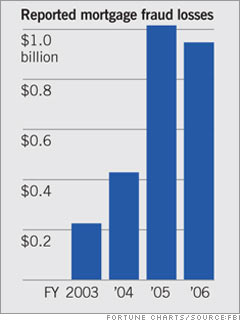 A con artist looks for a low-end, rundown house for sale. He approaches the seller and says he's willing to pay the full asking price-but only if the seller will do him a small favor. See, the buyer needs a bigger mortgage than the house is worth. So if the owner agrees to relist the house at, say, triple the price, then the buyer can apply for a bigger mortgage.
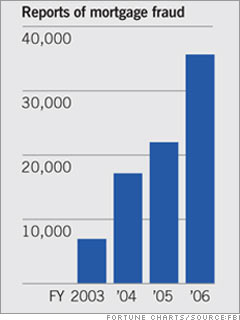 Con artists use a "straw man" or "straw buyer" to purchase a property. A straw buyer is usually someone fairly unsophisticated who has passable credit. Often straw buyers are told by the huckster-a mastermind who uses a false identity and typically poses as a sophisticated investor-that they'll get a nice chunk of money if they go in on a plain-vanilla business transaction with him.The straw buyer gets a mortgage on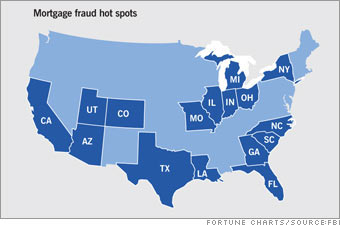
 NEW YORK (CNNMoney.com) -- A senate panel is scrutinizing the fees and billing practices of the credit card industry. The good news is that reform may be on the way. But we'll give you the tools you need to protect yourself now from credit card fees.
 1. Make sure you are getting the right vehicle.
 ized. Home purchases are assets that will probably increase in value, and debt used to purchase homes is "good" debt, or at least "not as bad as bad debt." Good debt is typically less expensive than bad debt--mortgage interest rates typically are much lower than credit card interest rates, for instance. Mortgage payments also are typically tax deductible, while the interest on credit cards and similar loans are not.

 , chairman of the FDIC in a statement.IndyMac customers with uninsured deposits will get at least half that money back, and they could get more back, depending on what the FDIC gets when it sells the bank, said Bair.Loan customers were advised to continue making loan payments as usual.
 Mortgage brokers are very beneficial since they can often negotiate a better deal than you can. Thanks to industry affiliations and
 Typically, a r