Tuesday, July 29, 2008

Write down is planned at Merrill

Only 10 days after stunning Wall Street with a huge quarterly loss, Merrill Lynch unexpectedly disclosed another multibillion-dollar write-down on Monday and sought to bolster its finances once again by selling new stock to the public and to an investment company controlled by Singapore.

Moving to purge itself of the tricky mortgage-linked investments that have brought the once-proud firm to its knees, Merrill said that it had sold almost all of the troublesome investments, once valued at nearly $31 billion, at a fire-sale price of 22 cents on the dollar.

As a result, Merrill expects to record a write-down of $5.7 billion for the third quarter. Such an outcome could push Merrill into the red for a fifth consecutive quarter if revenue remains weak and would bring its charges since the credit crisis erupted last summer to more than $45 billion.

The problems at Merrill, the nation’s largest brokerage, underscore how bankers and policy makers are struggling to contain the damage to the financial system and the broader economy caused by the collapse of housing-related debt. The latest news came on a day when the International Monetary Fund said there was no end in sight to the housing slump, a forecast that depressed financial shares as well as the broader market.

To shore up its finances, Merrill said it would raise $8.5 billion in new capital from common shareholders, including $3.4 billion from the investment arm of the Singapore government, Temasek Holdings, which, with an 8.85 percent stake as of June 30, is already Merrill’s largest shareholder. Those shares and a conversion of preferred securities into common stock will dilute the value of stock held by current shareholders by about 40 percent.

John A. Thain, who has struggled to turn Merrill around since becoming chief executive in December, said the sale of the worrisome investments, known as collateralized debt obligations, or C.D.O.’s, was “a significant milestone in our risk reduction efforts.”

The C.D.O.’s have plunged in value over the last year, forcing Merrill to take one write-down after another and sapping investors’ confidence. Merrill’s share price fell 11.6 percent on Monday, before the news of the write-down and stock sale were announced after the close of trading. Merrill is trading near its lowest level in a decade.

But the sale of the C.D.O.’s, to an investment fund based in Dallas, may enable Merrill to move on, investors said.

“What they sold, from a headline standpoint, is certainly constructive because they have reduced risk in a very sensitive area,” said Thomas C. Priore, chief executive of Institutional Credit Partners, a $12 billion hedge fund and C.D.O. manager in New York.

Merrill had been working on the C.D.O. sale and the effort to raise capital before its earnings call but did not finalize the actions until recent days.

Merrill’s sales could cause further write-downs at other Wall Street firms with C.D.O. exposure. If those companies — the likes of Citigroup and Lehman Brothers — have similar C.D.O.’s valued at prices higher than those at which Merrill sold, the firms may be forced to take additional charges to reflect the difference.

Merrill recently moved to raise money by selling its 20 percent stake in Bloomberg L.P., the financial news and data company, for $4.425 billion. Mr. Thain hinted at the C.D.O. sale in the quarterly earnings call, in response to a question from Meredith Whitney, an analyst with Oppenheimer & Company.

“Why not, at this point, be the first to purge assets and get it over with? And, if that means raising capital, raise capital,” Ms. Whitney said.

Mr. Thain responded that Merrill had been selling assets but had not yet sold any C.D.O.’s.

“Your question is a very leading one, and that would certainly be something that we would hope that we could do,” Mr. Thain said.

Merrill sold the investments at a steep loss. The United States super senior asset backed-security C.D.O.’s that Merrill sold were once valued at $30.6 billion. As of the end of second-quarter, Merrill valued them at $11.1 billion — or 36 cents on the dollar. And Merrill sold them for $6.7 billion to an affiliate of Lone Star Funds, the Dallas private equity firm.

Merrill provided 75 percent financing (also see Toronto mortgage refinance) to Lone Star Funds, which means Merrill lent the private equity fund about $5 billion to complete the sale.

The discounted sales will cause the majority of Merrill’s write-down in the third quarter.

Merrill also said it had settled a battle with the reinsurance company XL Capital Assurance, which had insured some of the firm’s C.D.O.’s.

Money, Money, Money

Wednesday, July 23, 2008

Trust the Mortgage Experts

Toronto Mississauga Mortgage Broker provides 100% financing for commercial, self-employed, and home mortgage refinancing across the GTA


Mortgage experts money saving tips:

To save money, you must stay in your house longer than the "break-even period" – the period over which the interest savings just cover the refinance costs. The larger the spread between the new interest rate and the rate on your existing loan, the shorter the break-even period. The more it costs to obtain the new loan, the longer the break-even period.

But beware! The break-even period is not the cost of the new loan divided by the reduction in the monthly mortgage payment. This widely used rule of thumb is a misapplication of the principle that when explaining something to the consumer one should "keep it simple." Simple is good, except when it’s wrong!

The rule of thumb does not allow for the difference in how rapidly you pay off the new loan as opposed to the old one. Lets say that in 1992 you took out an 11% 30-year fixed rate loan, which now has a $100,000 balance and 21 years to run. You refinance into a 7% 15-year loan at a cost of $3,750.

Monthly payment on the old loan = $1019

Monthly payment on the new loan = $899

Reduction in monthly payment = $120

$3750 divided by $120 = 31 months

The rule of thumb says that you break-even in 31 months. However, because of the shorter term and lower rate on the new loan, in 31 months you would owe $7,041 less than you would have owed on the old loan. So, the rule of thumb in this case seriously overstates the break-even period. Taking account of differences in the loan balance, you would actually be ahead of the game in 12 months, as shown below:

Savings in monthly payment: $120 for 12 months = $1440

Plus lower loan balance in month 12: $2620

Equals total saving from refinance: $4060

Less refinance cost: $3750

Equals net gain: $310

Next consider the case where an 11% loan taken out in 1992 was for 15 years, and now has only 6 years to run, while you plan to refinance into a 30-year loan. With the remaining term shorter on the old loan and longer on the new one, the difference in monthly payment rises to $1238. Using the rule of thumb the $3750 cost would be recovered in only 3 months. But this fails to consider the slower loan repayment on the new loan. Taking account of the slower repayment, you don’t actually come out ahead until 14 months out.


The rule of thumb (dividing the upfront cost by the reduction in mortgage payment) approximates the true break-even period only if the term on your new loan is close to the unexpired term on your old loan. In other circumstances it can lead you seriously astray.


The rule of thumb also ignores the fact that if you had not refinanced you could have earned interest on the money you pay upfront to refinance; and if you do refinance and the payment is reduced, you can now earn interest on the savings.

Money, Money, Money

Get a new home deposit loan

Toronto short and long term financing provider offers real estate deposit financing to bridge the gap when purchasing a new home.


Mortgage financing VS Contract Modification

The short answer is that most loans are serviced by firms that don't own the loan, and owners do not give servicing agents the discretion to modify the rate.

When market interest rates drop, a lender would rather drop the rate on a fixed-rate mortgage in good standing than lose it to another lender through a refinancing. On the other hand, if the borrower isn’t going anywhere, the lender doesn’t want to drop the rate. The lender’s objective is to drop the rate only if necessary to prevent loss of the loan.

If the lender is servicing its own loans, it may allow rate modifications for borrowers who request it. The writer who had his loan rate modified for $35 was one of them. But this doesn’t happen very often. The writer belonged to a dwindling group of borrowers whose loans are owned by lenders who do their own servicing.

Most loans today are serviced by lenders who don't own them. They sold the loans soon after closing and are now servicing agents of the owners. Except under special arrangements of the type described below, the owners do not grant their servicing agents the right to modify the interest rate.

This reflects a conflict between the interest of the owners and the interest of the servicing agents. Owners fear that if agents had the discretion, they would agree to rate reductions too readily because they lose nothing from a rate reduction.

Servicing agents make their money from a servicing fee, usually 1/4% of the loan balance when people are purchasing a home. The fee is deducted from the borrower's payment before the agent remits the remainder to the owner. A rate reduction that retains the customer protects the agent’s servicing fee but hurts the owner.

There are ways to reduce this conflict in order to make rate modifications possible. One approach is to charge the borrower a fee for the right to have the rate reduced in the future, with the fee split between the servicing agent and the owner. Countrywide Home Loans and Wells Fargo Home Mortgage have programs of this sort developed in collaboration with the Federal agencies Fannie Mae and Freddie Mac, who buy the mortgages from them. These programs have not had much market impact to date.

While lenders will seldom allow servicing agents to reduce rates, they don't want their loans being refinanced with other lenders either. Hence, they allow and even encourage their agents to adopt "loan retention programs". Under these programs, the agents attempt to identify borrowers who are likely to refinance, and try to head them off at the pass with their own refinancing proposal.

Because loan retention programs create a new mortgage, they generate settlement costs. Some lenders, and the major Federal agencies Fannie Mae and Freddie Mac, have offered "streamlined refinance" options. These programs reduce the required documentation and costs when lenders refinance loans that they have been servicing, for which they have the borrower’s payment history right at hand.

A few lenders have combined streamlined refinance with "no-cost" mortgages to offer programs where borrowers can refinance at little or no cost whenever interest rates decline. A widely publicized program of City Line Mortgage allows borrowers to refinance by paying only for title insurance. All other settlement costs are borne by City Line.

City Line prompts borrowers when the market has fallen .5% or more below the rate on their mortgages. The borrower must request the refinance and must have a good payment record, but City Line does the work using "streamlined refinance" rules set forth by their investors.

The appeal of this program to borrowers is that refinancing is quick and easy, the refinancing cost is very low, and the lender prompts them when the opportunity is there. The downside is that borrowers pay an above-market rate when they take out their loan.

On January 11, 2001 I found that City Line’s quoted price for new customers on a 30-year fixed-rate mortgage was about .625% above the rate available from three mortgage shopping sites. That’s a stiff price to pay for a low-cost refinance option.

Money, Money, Money

Wednesday, July 16, 2008

What Mortgage Refinancing Can do for You

Imagine a scenario where you can have access to extra cash, while simultaneously lowering your monthly mortgage pay-ment. This dream can become a reality through mortgage refinancing. A house is the largest asset you may ever own. Likewise, buying a property may be the largest expense you will have in your monthly budget. Would not it be great to use this asset to reduce your monthly payment and put extra cash in your pocket? When you refinance your mortgage, you can take advantage of the equity in your home and increase cash flow.

What is a "No-Cost" Mortgage refinance any way? And does it make sense?

No-Cost Refinance Defined

A no-cost refinance is one with an interest rate high enough that the lender’s rebate covers the closing costs (but not all closing costs, see below). Rebates are negative points. Lenders charge points on low-interest rate loans and pay them on high-rate loans. For example, on a 30-year fixed-rate mortgage, they might quote 5.75% with 2 points, 6.25% with zero points, and 7% with a 1.5-point rebate. If the 1.5 point rebate covered the settlement costs, 7% could be the no-cost rate.

In sum, the borrower taking a no-cost refinance is paying the settlement costs in the rate. If he pays off the mortgage in a few years, it’s a good deal. If he has it a long time, it is a costly deal.
The Break-Even Period

The proof of the pudding is in the numbers. The critical number for potential borrowers is the "break-even period" (BEP) for a no-cost loan, relative to the same loan with a lower rate on which the borrower pays the costs. Over periods shorter than the BEP, the no-cost loan has lower costs. Beyond the BEP, the no-cost loan has higher costs.

I have two BEP calculators:

11a Break-Even Period for FRMs
11b Break-Even Period for ARMs

The calculators factor in the tax benefits on interest and on points, the reduction in loan balance, and interest loss on monies used to make monthly payments and pay points.

To illustrate, on July 10, 2004 I shopped Eloan.com, a very competitive web site, for a 30-year fixed-rate loan that included a no-cost version at 7%. I used the calculator to determine the BEP relative to a 6.375% version on which the borrower paid settlement costs, including 4/10 of a point. The comparisons were done for both a refinance and a purchase, and to make it as unfavorable as possible for the refinance, I assumed the highest possible tax rate of 39.1%.

The BEP turned out to be 40 months on a purchase transaction and 44 months on a refinance. Over periods this short, the difference in tax treatment between a refinance and a purchase does not carry much weight. The reason is that a refinancing borrower who pays off his loan in full can take the entire remaining tax deduction in the payoff year. If payoff occurs in the fourth year, the loss from deferral of the deduction is small.

At lower tax rates, the BEP is even shorter. At a 15% rate, it is 31 months on a purchase and 32 months on a refinance.
Costs That Are Covered in a No-Cost Mortgage

If you shop for a no-cost loan, make sure that you and the lender agree on exactly what it means. It is not "zero points" which leaves you responsible for other types of lender fees as well as other payments to third parties. It is not "zero fees" which still leaves you responsible for payments to third parties. And it is not "no cash" because that could mean that you are paying the costs but the lender is increasing the loan by enough to cover them. On a true "no-cost" loan, the lender collects no fees and pays other settlement costs on your behalf without increasing the loan amount.

But there are some costs for which borrowers will remain responsible. One is per diem interest, which is interest from the day of closing to the first day of the following month. On a refinance, you will also pay interest on your old mortgage from the first of the month to the closing day. Another outlay you should expect to pay is escrows, though on a refinance you will get credit for escrows held by the old lender. In addition, expect to pay homeowners insurance and any transfer taxes.
The APR on a No-Cost Mortgage

I am frequently asked whether you can tell a no-cost loan from the APR? The answer is, "yes and no". If the APR is greater than the interest rate it means that you are paying some lender fees and don't have a no-cost loan. However, the fact that the APR equals the interest rate doesn't necessarily mean that you have a no-cost loan because not all settlement costs are included in the APR. You are not paying any of the fees that are included in the APR, but you might still be paying some others.
No-Cost Refinance in Conclusion

The no-cost real estate deposit refinancing is a clear winner for the borrower who intends to sell his house within a few years, and has an existing mortgage with an interest rate above the rate available in the market on a no-cost loan.

During periods of declining interest rates, such as occurred between early 2001 and mid-2004, the no-cost option also works well for borrowers who refinance every time the market drops to a new low. Through successive refinancings, these borrowers keep the life of their loans short. When interest rates start to rise, however, the last no-cost refinancing turns out poorly for those who keep the mortgage for a long period.

In addition, no-cost mortgages are easy to shop, which can result in significantly lower costs. This important point is discussed in No-Cost Mortgages.

Money, Money, Money

Not Only a Great Rate

Most people assume the lowest rate means the best rate mortgage. A great rate is important – but it is all the other terms that add up to a great mortgage.Banks know it – that is why they display their rates in large numbers everywhere you look. A mortgage broker understands that rate is only one aspect of the mortgage, and that negotiating other terms to your advantage will maximize your savings in the long run. We will help you get the whole package – a great rate plus the best amortization schedule, payment frequency, flexible repayment terms, transferability, and more so you do not find yourself trapped with huge penalties if your needs change.

And in what situation a lender you lend you money?

Lender Ambivalence Toward Refinancing Their Own Customers

In a refinance market, lenders are conflicted with regard to how they treat their existing borrowers. They don’t want to encourage any of their borrowers to refinance who might otherwise not get around to it. On the other hand, if they know that a borrower is going to refinance regardless, they want the new loan.

To keep loans that might otherwise get away, many lenders have "retention" programs. These programs are designed to recapture borrowers who are determined to refinance, without putting any refinance ideas into the heads of other borrowers. Distinguishing the two groups is not easy, but there are ways (such as real estate financing deposit).

For example, if you call your lender to find out the exact balance of your loan and your lender has a retention program, you will quickly receive a call from its loan origination department offering to refinance your loan. A balance inquiry usually means the borrower is looking to refinance.


Advantage of Refinancing With Your Current Lender

The lender to whom you are now remitting your payments may be in a position to offer you lower settlement costs than a new lender, but this can vary from case to case.

The greatest potential for lower settlement costs arises where the current lender was the originating lender which still owns your loan, a common situation with loans made by banks and savings and loan associations. If your payment record has been good, the lender may forgo a credit report, property appraisal, title search and other risk control procedures that are otherwise mandatory on new loans. This is strictly up to the lender.

Indeed, if you are not looking to take any cash out of the transaction and are looking only to reduce the interest rate, the lender may elect simply to reduce the interest rate on your current loan rather than refinance. This avoids all settlement costs except a small fee for changing the contract.

If the lender to whom you are now remitting your payments is the originating lender but no longer owns the loan, the potential for lower settlement costs is less. In this case, your lender does not have the same discretion to forego settlement procedures but must follow the guidelines laid down by the owner of the loan.

If the loan had earlier been sold to one of the Federal secondary market agencies, Fannie Mae or Freddie Mac, the guidelines are theirs. While both agencies have provisions for "streamlined refinancing documentation", the discretion granted the lender, and therefore the potential cost savings, is quite limited.

The potential for lower settlement costs is least when the lender to whom you are now remitting your payments is neither the originating lender or the current owner. This is a fairly common situation that arises when the contract to service the loan is sold. In this case, your lender may not be in a position to use all of the streamlined refinancing procedures because its files do not contain some of the information those procedures require, such as the original appraisal report.
Disadvantages of Refinancing With Your Current Lender

When lenders take the initiative in soliciting their own customers, they may base their offer on the borrower's existing rate. This means that in a 5% market, the borrower with a 7% mortgage might be offered 6% while an otherwise identical borrower with a 6% mortgage might be offered 5.5%.

The goal of the existing lender is to provide an attractive saving over the existing loan while giving up as little as possible. Potential new lenders try to do this as well, but they don't know what your existing rate is unless they dig for it in the county courthouse, or purchase it from a lead generator who induced you to disclose it.

In addition, you may not get the best service from your existing lender, as illustrated by this letter.

"I filled out all the forms to refinance my loan [with the existing lender], paid the $350 lock-in fee, provided all the documents they asked for...But it is now 4 months and still it hasn't closed...I call the person in charge of my refinancing, and he says he will get back to me, and he never does... What do you think could be the problem?"

The problem is that the lender already has a loan at a higher rate, and has no incentive to close the new one. While it probably is not deliberate, in a refinance boom lenders get behind in loan processing and have to set priorities. If they have to choose between processing a loan they will likely lose if they don't get it done quickly, or a loan they can't lose because they already own it, the choice is all too easy.

Finally, when you borrow from your existing lender, you do not have a right to rescind within three days of closing, as you do in all other refinances. This could be critically important. See Rescinding a Mortgage deposit financing.

Money, Money, Money

Some Things to Know About Applying for a Mortgage

Applying for mortgages with several banks can harm your credit rating. Many people are surprised to learn that skipping payments isn’t the only way to damage a credit rating – the truth is, you weaken your credit rating with every application you fill out. This is because each bank pulls a credit bureau on you to assess your application and these inquiries are reflected on subsequent bureaus. Many lenders consider multiple inquiries to be a red flag on your credit. A good credit rating is critical in getting the best mortgage rate and terms. A mortgage broker protects your credit by pulling just one credit report and submitting it to lenders on your behalf. This way you can shop for the best possible mortgage amongst many lenders without damaging your credit rating.


Factors Affecting the Choice Between Second Mortgage and Mortgage Insurance

Interest rate on the second mortgage relative to the rate on the first:The smaller the difference in rate between the two mortgages, the greater the advantage of the combination relative to the single loan.

Term on the second mortgage relative to the term on the first: Shorter term loans pay down the balance faster than longer term loans. Since the second mortgage has a higher rate than the first, the faster the second is paid off relative to the first, the greater the advantage of the combination compared to the single loan.

See also the real estate financing when you are buying a property

Your tax bracket: Because the combination loan enjoys a larger tax write-off, the combination is most advantageous for borrowers in the highest tax bracket. This was not true in 2007, however, and may not apply in future years as well.

Closing costs: With one loan closing, closing costs should be the same for one loan or two. But if the second mortgage is from a different lender and requires a separate closing, the combination will have higher closing costs.

Expected appreciation rate: Borrowers can request that their mortgage insurance be terminated when the loan balance reaches 75% or 80% of the home’s appreciated value. This means that the higher the expected appreciation rate, the less the advantage of the combination.

Other factors: How long you expect to remain in the home and the rate of return you can earn on investments also affect how your choices shake out.

Money, Money, Money

Money2Close's Services

Money 2 Close Inc. is a private corporation that was created to facilitate real estate transactions, for Buyers that do not have their Deposit funds readily available.During the Founder’s real estate career, this problem would occur on a regular basis. A solution had to be found whereby the Buyer could borrow this money quickly, until the closing date. Normally the money is either in the equity of the Buyer’s existing home that they have just sold, or in the case of First Time Buyer’s with the 100% financing program, the funds will arrive from their lending institution on closing day.

This however creates a problem, as the home deposit is needed “Upon Acceptance” of the “Purchase & Sale Agreement”.Therefore, once you apply to us for your real estate financing deposit, we will move quickly to approve you, and fund your Deposit. There is a $49.95 application fee, which is paid to the Government in order for us to do our due diligence. Also we have provided a “Deposit Advance Calculator”, so that you can estimate the cost of borrowing. All our advances are registered, and the legal fee is $250.00 + GST. However this fee can be borrowed with your home deposit.

Money, Money, Money

Variable Rate Mortgage Financing

There is more to most variable rate mortgages than meets the eye. Just like most mortgages when buying a property or home, people typically fall into two categories: Variable Rate or Fixed Rate. “Fixed rate” people feel most comfortable when they know their exact mortgage payment at all times. “Variable rate” people are willing to experience the uncertainty of their payment amount in exchange for the savings that come with it Variable rate terms and conditions can be quite complex, however.


A mortgage broker has the expertise to sort through the conditions, explain their implications to you and help you find the right variable rate mortgage for you.There’s a world of mortgage products the average person doesn’t know about. Most people aren’t aware that banks offer only a fraction of the mortgage products available. A mortgage broker, however, is an expert on the different products and lenders in the industry and stays abreast of changing market conditions. That knowledge can be invaluable in finding the best mortgage for your needs. Self-employed? New to Canada? Looking to buy a rental property? A mortgage broker can help you qualify for specialized mortgage products like these and many more.

Money, Money, Money

Some Financing Options

Gap Financing is a term mostly associated with mortgage loans or property loans. It is an interim loan given to finance the difference between the floor loan and the maximum permanent loan as committed. This is to provide funding during the time between the end of loans extended during the development stage of a project and the beginning of the permanent mortgage extended to the buyer.When getting a home deposit or short term financing, a deposit advance is funded within 24hours of receipt of all paperwork and contracts requested normally.


Interim fina
ncing is not the same thing as gap financing. The difference between them is that gap financing is not secured. For gap financing, the project has a funding shortfall, or gap, because its contracts do not provide full funding of the costs of the film.

Money, Money, Money

Best Variable Rate Mortgage

Your mortgage broker works for you, not your lender. When you visit a bank, the representative’s job is to recommend their mortgage products to you, regardless of whether they really suit your needs. A mortgage broker, however, has no such mandate – our only job is to ensure you get the best rate mortgage possible.

Think of it this way. You probably wouldn’t buy a home without the advice of a real estate agent. Nor would you close the sale without a lawyer. Why? Because they’re specialists in the field of home buying – they know the right questions to ask and the proper steps to take to minimize the risk that you’ll regret your purchase later. They’re looking out for you. And so are we.

A mortgage broker is a good person to turn to when shopping for a home loan. These individuals have connections with various lenders and can help you determine which lender has the best loan deal for you. Unlike a loan officer, a mortgage broker usually does not work directly for any one lender. This means that you can shop the competition with the help of your broker much easier.

If you are considering using a mortgage broker, you are probably wondering how that individual will be paid. You do not want to pay more for your mortgage to cover the commissions from the mortgage broker. Using a broker does not end up costing you more. The broker is paid by the bank, not the borrower. If a broker is charging you an upfront fee, find a different broker. The bank will pay the mortgage broker a small percentage of the entire mortgage amount.

A mortgage broker is particularly helpful if you are searching for a specialized mortgage product, such as a bad credit mortgage or a mortgage for most of the home's value. Because brokers have inside knowledge of the industry, they can help you avoid constant rejections from lenders that do not offer the services that you need.

Working with a mortgage broker will save you time and frustration as you shop for your next home loan. The broker does all of the work for you. You do not have to approach lender after lender. Rather, the broker will scour all of the current offerings and find the best deal for your needs. You will not have to fill in application after application. You simply fill in one application with the broker, and possibly one with your chosen lender. In the end you will have an excellent loan that fits your needs perfectly!

Money, Money, Money

What Lending Rate Cut Means For Your Mortgage

On Tuesday, the Bank of Canada cut its key lending rate by half a percentage point, the biggest cut in six years.

For those looking to buy a house, that decision is a big influence on what kind of mortgage to chose.

"We're in a variable mortgage right now," says homeowner Dan Davies. But that might not last long.

"We're considering dropping it. A half a percent is a big drop so it's a lot of money to be saving."

There are other factors that influence his decision, like a new baby. "The fewer variables in my life, the better, especially with this guy around," Davies jokes.

However, that may not be the case for everyone.

"For that first-time purchasing a home, obviously the fixed rate is going to be the best solution," points out Kathy Ellis, a spokesperson for RBC.

"If you're somebody who's a more experienced purchaser, who may be a second or third time homeowner, they may want to float with a variable rate."

The key interest rate of 3.5% is the bank's way of boosting the housing market. An RBC survey found that there's a big drop in people looking to buy real estate.

"There is a slowdown. There's no question about that," admits Ellis. "But their intentions of our respondents are still very positive."

Many Canadians still believe real estate is a good investment, and their confidence may get another boost soon: The Bank of Canada has hinted that further cuts to its overnight rate may come at its next scheduled meeting on April 22.

Money, Money, Money

Tuesday, July 15, 2008

What a rate cut means to homeowners

NEW YORK (CNNMoney.com) -- Most analysts see the Fed cutting rates for the third consecutive time tomorrow. What investors don't know is just how deep the Fed will cut. What will this mean for your mortgage? Here's what you need to know.
1: Long-term mortgages won't move much
Right now investors are split on whether the Fed will lower the funds rate by another quarter point to 4.25% or cut it by a half-point, to 4%. But the fact is, there's not much doubt that the Fed will cut rates. And because of that, the market has already priced that in, says Mike Larson with moneyandmarkets.com. 30-year fixed rates have been falling for some time.

In July, the average rate on a 30-year fixed mortgage was 6.66%. Last week, it was 5.82%. So, a rate cut won't really do very much to lower long-term rates. They're already low. So if you want to refinance, it's a good time to start shopping.

2: ARM resets not as severe
The Fed move tomorrow may be more significant to borrowers with adjustable-rate mortgages than what the government is doing in freezing subprime interest rates. That's according to Greg McBride at bankrate.com. Most resets on adjustable rate mortgages will reset in the middle of next year. And the fact that the Fed is cutting rates, will make these resets more manageable for prime borrowers, which aren't covered by the foreclosure-prevention plan announced last week.

So, if you had an adjustable rate mortgage that started at 4.5% and your rate was going to reset at 7.5%, you may only face a rate reset of 5.7%.

3: HELOCS will be cheaper
Home equity lines of credit will be cheaper if the Fed does cut rates. It may take up to three billing cycles to see the actual decrease in your bill. If you need to consolidate debts or you need money for medical bills or college expenses, you may consider shopping around for a HELOC since lenders are likely to price in the Fed's cut immediately.

4: Keep it in perspective
The take away here is that the Fed is on your side. This rate cut won't be the silver bullet that fixes the housing market. But it's apparent that Fed is in a rate cutting mode, and the cumulative effect on that will help consumers. There are a number of things the Federal Reserve can't control, like the impact of the credit crunch.

You need to look at inflation, job growth and the overall health of the economy as indicators of when this housing crisis may subside. When we get down to it, there are two issues here, according to McBride. That's inventory of houses on the market and the affordability of buying a home. Interest rate cuts won't do much to make that go away. Sometimes, it's just a matter of time.

Money, Money, Money

Mortgage Fraud - The million-dollar dump

A con artist looks for a low-end, rundown house for sale. He approaches the seller and says he's willing to pay the full asking price-but only if the seller will do him a small favor. See, the buyer needs a bigger mortgage than the house is worth. So if the owner agrees to relist the house at, say, triple the price, then the buyer can apply for a bigger mortgage.
The swindler often tells the homeowner not to worry-he wants to use the extra mortgage proceeds to fix up the house. The seller usually heartily agrees: He's getting the full price … and besides, wouldn't it be nice to have the place fixed up? The swindler, using a false identity, takes out the supersized mortgage, pays the seller, and pockets the remainder. The house usually ends up in foreclosure.

Money, Money, Money

Mortgage Fraud - Straw-man swindle

Con artists use a "straw man" or "straw buyer" to purchase a property. A straw buyer is usually someone fairly unsophisticated who has passable credit. Often straw buyers are told by the huckster-a mastermind who uses a false identity and typically poses as a sophisticated investor-that they'll get a nice chunk of money if they go in on a plain-vanilla business transaction with him.The straw buyer gets a mortgage on buying a property. Then the straw buyer signs the property over to the huckster in a quitclaim deed, relinquishing all rights to the property as well as the underlying mortgage. The straw buyer gives the huckster the mortgage proceeds, taking a small cut-usually 10 percent-for himself. The huckster doesn't make any mortgage payments and often even pockets rent from unsuspecting tenants until the property falls into foreclosure. Usually the straw man, not the mastermind, is arrested for fraud.
Money, Money, Money

Mortgage Fraud - Rent-to-steal

Say you're advertising to rent your home or investment property. A renter shows up who seems to have all the right documentation to qualify. It's a deal! The monthly rental checks start coming in on time. But behind your back, the renter (using an alias with fake or stolen identification) goes to the local court and files a false "satisfaction of loan" document complete with your forged signature, forged bank officers' signatures, and bank seals. This shows that the property is now "free and clear"- that is, there are no outstanding mortgages on it.

Now the renter/ con artist is able to go to lenders and take out new loans on the property-often taking out several, practically simultaneously, in your name. Suddenly your renter vanishes and three or four banks are claiming title to your home.


Money, Money, Money

Sidestep credit card fees

NEW YORK (CNNMoney.com) -- A senate panel is scrutinizing the fees and billing practices of the credit card industry. The good news is that reform may be on the way. But we'll give you the tools you need to protect yourself now from credit card fees.

1: Avoid universal default
Universal default is one of most controversial practices by credit card companies because it allows your issuer to raise interest rates on cards as high as 35 percent if you are late paying any other bills such as your car payment.


Credit Card Rates

Find the best credit card for you among thousands of issuing banks.
Select a card type from the pulldown menu and click on the arrow to begin.
Select a card type Standard Gold Platinum
But it may be on its way out. In fact, Citigroup announced recently it was abandoning the practice. As a consumer, it's very difficult to know if your card carries a universal default clause. But with a little bit of research, you can avoid cards that are notorious for universal default.

You can also check your cardholder agreement by looking at the area that mentions "default pricing." If that section indicates your default pricing is based on any information in your credit report, that's a red flag your card issuer has a universal default policy.

2: Forget double-billing
Double billing happens when the credit card company charges interest on your entire purchase even if you've already paid part of it off. So you wind up paying interest on the sum of the average daily balances for the current and previous billing periods. The people who are most vulnerable to this are those who sometimes carry a balance on their cards.

Too deep in debt? Where to turn for help
To avoid double (or two-cycle) billing, make sure your bank calculates your finance charge on one billing cycle only, says Curtis Arnold of CardRatings.com. Look for the phrase "average daily balance" on your credit card agreement.

Recently Chase announced it would end this practice and start charging interest on a customer's average daily balance for just one billing cycle.

3: Work around late fees
Lawmakers continue to challenge credit card execs over rising late fees and other dubious penalties and practices. Right now most credit card issuers charge late fees in excess of $30 and penalty interest rates can top 30 percent in some cases.

To avoid these fees, automate your payments online. You can even set up your payments months in advance. But, if you know your payment is going to be late, you may be able to avoid a late payment fee if you call ahead. Credit card companies may give you a break in some circumstances.

4: Transfer with caution
We've all gotten those ads for zero-percent balance transfer fees. And while transferring a high credit card balance to a card with lower rates can be a great move, it's becoming more and more expensive.

It used to be that balance-transfer fees were capped at $75 or so. But more often credit card companies are getting rid of caps on balance transfer fees or increasing the fees, says Arnold of CardRatings.com.

For example, if you're transferring $10,000 to a card with a lower interest rate, and that fee is 3 percent, that transfer will cost you $300. To find out if you may fall victim to high balance transfer fees, look at your credit card agreement. If there is a reference to a minimum fee for a balance transfer, but there's no reference to a maximum balance transfer fee, chances are, there are no limits to how much money you may be on the hook for, says Arnold.

Money, Money, Money

Top Things to Know About Buying a Car

1. Make sure you are getting the right vehicle.

This seems obvious, but you could wind up an unhappy car owner if you haven't thought carefully about how many people and how much luggage or gear you need to carry.

2. Assess the worth of your old car.

Whether you plan to trade it in or sell it, your current car can be an important factor in your budget. Checking the right Web site and maybe your local newspaper will give you a realistic valuation. Selling it directly instead of just trading it may also mean a sizeable difference in what you get for it, though it may take a while longer to reap the proceeds.

3. Decide whether new or used is best for you.

Cars are built better now than in the past, so used cars make a lot of sense. But if you get a rebate or other cost break, the math may be on the side of a new vehicle.

4. Consider whether leasing or buying makes more sense.

Leasing provides lower monthly payments than buying with an auto loan. But it's not for everybody. If you don't have money for a down payment or if you trade your car every two or three years, you may be a good candidate for a lease.

5. Do your homework and set your target price.

The Internet has made it easier than ever to find out the dealer's cost for each vehicle and its options. That's the first step to getting the best possible deal.

6. Shop for money before you shop for the car.

If you plan to buy with a loan, check your credit union or local bank quotes online to find the lowest rate. Getting a pre-approved loan will give you added confidence in negotiating a good price.

7. Negotiating a lease.

In the complicated world of leasing, the dealer will have the upper hand unless you learn the jargon and how to negotiate the various segments of a lease deal.

8. Negotiate a purchase.

If you are doing it yourself, get bids from several dealers, keeping the focus on the dealer's invoice price, which you will know from your research. You may also be able to get bids without going to showroom after showroom.

9. If you hate haggling, consider using a car-shopping service.

Auto-buying services, such as Web sites or discount clubs, make things easy with pretty good, no-haggle prices. But with most of them, you get quotations from only one dealer. Consumer services that shop several dealers near you may deliver even better prices.

10. Don't let the deal-closer close out your savings.

The finance manager isn't there just for the paperwork. He or she wants to sell you high-profit financial and mechanical add-ons. These are seldom worth the money

Money, Money, Money

What grads need to know about finances

• You should begin saving for retirement right away. At a minimum, make sure you attain any matching contributions that your firm may offer.

• Use part of salary increases to increase the percentage of your salary saved. Windfalls such as an inheritance or IRS refunds should be used in the same manner. Don't use all of your take-home pay to finance your lifestyle--you will never be able to begin serious saving for retirement.


• While you should be cautious about taking on any kind of debt, there is a difference between good debt and bad debt. Debt used to finance "things"--credit card purchases, cars, any depreciating asset--is "bad" debt and should be minimized. Home purchases are assets that will probably increase in value, and debt used to purchase homes is "good" debt, or at least "not as bad as bad debt." Good debt is typically less expensive than bad debt--mortgage interest rates typically are much lower than credit card interest rates, for instance. Mortgage payments also are typically tax deductible, while the interest on credit cards and similar loans are not.

Money, Money, Money

Is Your House Worth More?

Toronto real estate has been on a roller coaster ride over the past 40 years, with soaring highs, gut-wrenching lows, strange twists and heart-stopping turns.

As an investment, you could always count on upscale areas like Rosedale, Forest Hill and the Bridle Path to produce good long-term returns. But if you put your money in the Beach or Riverdale in the last 20 years – or in more recent hot spots like South Riverdale and East York – growth has been spectacular. And, while new development has boosted prices in outlying regions such as Milton, King and north Pickering, other areas in north Toronto and parts of Markham are flatlining.

Surprisingly, 40 areas across the GTA have not even kept pace with inflation since house prices hit their 1989 peak.

The three maps show how average house prices have evolved over the last 40, 20 and 10 years. The largest map – showing changes since 1999 – includes the outer regions, reflecting the increasing coverage of the Toronto Real Estate Board, which tracks resale housing sales.


Money, Money, Money

4 hidden ways credit cards help you

Extended warranties
Before you pay extra for an extended warranty, find out whether your credit card will cover it for free first. Credit card issuers often offer warranty extensions.

"The odds of things going wrong in that warranty period are pretty slim, which is why issuers offer them," says Scott Bilker, the founder of financial advice site Debtsmart.com. World MasterCard and American Express cards, for example, double most warranty periods. (These warranty extensions max out at one year.)

Return guarantees
Stuck with an unwanted item because you lost the receipt or missed the short return period? If you can prove you purchased the item (by pinpointing it on your statement) and the store rejected your request to return it, the credit card issuer may accept the item instead.

Capital One's No Hassle Points Rewards card and many VisaPlatinum cards offer up to $250 back per item for up to 90 days after purchase.

Coverage of stolen or damaged goods
Under the Fair Credit Billing Act, a federal law that enables consumers to dispute unauthorized or incorrect credit card charges, every purchase made with plastic carries certain protections.

The law covers everything from double-billing accidents at the grocery store to the handbag you bought on eBay that turned out to be a fake.

Card companies regularly look for ways to get more of your money. Here's how to tell whether your issuer wears a black hat or white one.Theft and accidents happen, but that doesn't mean you're out of luck. Some card issuers will reimburse for damaged or stolen items within 90 days of the purchase date. They usually won't cover loss or normal wear and tear, however, so specify what happened when filing the claim, says Bilker.

Citigroup's Citibank cards, for example, offer as much as $500 to $1,000 back per item in the event of theft, accidental damage or (in some cases) fire. MasterCard offers up to $10,000 per item for Gold-level or better cards -- above and beyond what insurance covers.

Price protection
If the item you recently bought goes on sale or is cheaper at another store, your credit card may refund the difference. Just present proof of the sale price or price change and the original receipt.

The catch: Many issuers exclude prices found at online stores, making the policy significantly less valuable, Dworsky says. Most Chase and Citibank cards refund the difference up to $250, within 60 days of purchase.

Money, Money, Money

Monday, July 14, 2008

IndyMac: Your money is safe - FDIC

NEW YORK (CNNMoney.com) -- The FDIC stressed Sunday that the takeover of failed bank IndyMac is largely a "non-event" for most customers.

"Come Monday morning, it will be business as usual for all insured customers," said John Bovenzi, chief operating officer of the Federal Deposit Insurance Corporation, which insures U.S. banks.When a bank shuts down, traditional accounts are insured to at least $100,000.

Some accounts, such as annuities and mutual funds, are not insured at all. Individual Retirement Account (IRAs) funds are insured to $250,000.If you had $100,000 at one bank and $100,000 at another, both would be insured, according to Allan Roth, a Colorado Springs, Colo. financial planner.

Individuals with multiple accounts in the same name at the same bank are limited to the $100,000 cap. If an individual has a $100,000 savings account in her name and a $100,000 joint account with her husband, both accounts would be covered."


The difference is not in the number of accounts [that each individual has at an FDIC-insured bank]," said Roth. "

The difference is in the titling [or name] on the account."IndyMac Bancorp, once one of the nation's largest home lenders, was taken over by federal regulators on Friday and transferred to the FDIC. While IndyMac customers did not have access to online and phone banking services over the weekend, they could access funds by ATM, debit cards and checks. "

That fact is that for insured depositors, IndyMac's conversion has been largely a non-event," said Sheila Bair, chairman of the FDIC in a statement.IndyMac customers with uninsured deposits will get at least half that money back, and they could get more back, depending on what the FDIC gets when it sells the bank, said Bair.Loan customers were advised to continue making loan payments as usual.

The FDIC disclosed last month that it was closely watching 90 financial institutions on its "problem list," up from 76 in the first quarter of 2008. The total assets of "problem" institutions rose from $22.2 billion to $26.3 billion, the FDIC said.

The FDIC does not publish a list of trouble banks out of concern it could spur a bank runBut for non-IndyMac customers, Bair stressed that their money is safe. "IndyMac is only one of 8,494 depository institutions operating throughout the country," she said. "The overwhelming majority of banks in this country are safe and sound.

The chance that your own bank will be taken over by the FDIC is extremely remote. And if that does happen, you will continue to have virtually uninterrupted access to your insured deposits."Bovenzi added that all IndyMac branches will reopen Monday with full operations. "Customers should view this as a change in ownership," he said.

Money, Money, Money

Thursday, July 10, 2008

Mortgage fraud inquiry nets hundreds

WASHINGTON (CNN) -- Hundreds of people across the country have been arrested by law enforcement officials targeting crooked mortgage brokers, real estate agents, and other industry officials, the head of the FBI and a top Justice Department official said Thursday.

FBI Director Robert Mueller and Deputy Attorney General Mark Filip announced the arrests the same day two former Bear Stearns hedge fund managers, Ralph Cioffi and Matthew Tannin, surrendered to the FBI. The men are expected to face federal charges that they intentionally misled investors in two funds that collapsed last summer under the weight of wrong-way bets on mortgage-backed securities.


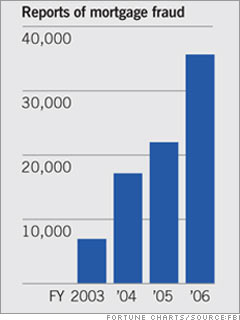
More than 400 people have been charged in the mortgage fraud probe, of whom nearly 300 have been arrested, including 60 in a coordinated sweep Wednesday, the Justice Department said.

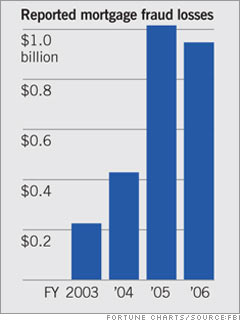
The losses in the mortgage fraud cases cost consumers more than $1 billion, Mueller said."Operation Malicious Mortgage," the investigation by the FBI and Justice Department, began March 1, government officials said. It resulted in 144 fraud cases in which 406 defendants were charged.

The FBI is investigating about 1,400 more cases of potential fraud, Mueller said, calling it "a substantial number of investigations, unfortunately."The agency has 42 mortgage fraud task forces in operation, employing 180 agents, Mueller said.

Officials indicated the suspects were involved mostly in small-scale schemes.


Money, Money, Money

Wednesday, July 2, 2008

The Importance of Mortgage Brokers

Mortgage brokers are very beneficial since they can often negotiate a better deal than you can. Thanks to industry affiliations and memberships, mortgage brokers have access to discounts that aren't available to the general public. They also know from experience which terms lenders will flex on, making it easier to shape a mortgage to your exact needs. It is important to allow a mortgage broker to handle the process from the start since they can't step in and negotiate a better with the same bank for you once you have started an application personally. This way, they will be able to handle everything from start to finish without complications. Whether you're buying a home, renewing your mortgage, or refinancing, the experts at Mortgage Direct2u can help you make the right decisions.


Money, Money, Money

Mortgage Refinancing Service

Typically, a real estate deposit financing is done when you have a mortgage on your home, and then you apply for a second mortgage to pay off the first mortgage. When considering a home refinancing, it is important to first determine whether your interest savings will exceed the fees you pay to refinance. At mortgage direct2u, a mortgage financing company in Toronto, the length of your refinanced mortgage can be shortened with the help of the knowledgeable staff and superior service at this mortgage broker.


Mortgage Refinancing is a process in which you replace one or more existing loans or debts with a new loan, usually secured by the same assets. The most common type of refinancing is for home mortgages. Before you decide to go ahead and refinance, there are a number of facts you need to consider.

Is Refinancing Right For Me?

In most refinancing situations, the borrower does so mainly to reduce the interest cost and replace it with a new lower rate. Before you jump into refinancing, you must determine whether the new loan option will ultimately save you money.

When you purchased your home, there were a number of factors that determined your total principal amount. Credit rating, down payment and the current interest rates were at the top of that list, but these things change over time. It may now be beneficial to refinance with your higher credit score, increase of cash flow and lower rates set by the Federal Reserve.

Benefits of Refinancing

The main goal of refinancing should be to lower your monthly payment, reduce your payment period and save you money!

You can now easily apply to refinance your home mortgage and fulfill that goal. For example, you have a 30-year mortgage you’ve been paying since you bought your first home when you were young, had average credit and the market rates were high. It’s now 10 years later and you are feeling locked in to your loan. You have a stable job, a high credit score and the US is in a rate-cutting period. You now have option to refinance! You can change your payment period to 10, 15, or 20 years, saving you thousands of dollars in interest. Because your refinance rate is lower and on a shorter payment period, you can still have the same monthly payment. This doesn’t mean the refinancing was useless. You are now building equity in your home faster as you cut out interest and are paying more on principal.

Payment Traps: Refinancing Can Help

A huge problem that many homeowners face is their adjustable rate mortgage. At the time, interest rates were low and it was a great loan. However, interest rates have risen and your payment is now out of hand. Another trap for homeowners occurs when one buys their home with the intention to sell in a few years. They’ve gotten busy or grown attached and our now stuck in an unstable loan. Refinancing could be the answer for you! You can now switch from your adjustable rate mortgage to a fixed-rate mortgage and protect yourself against fluctuating interest rates. You’ll have more security every month and hopefully, a cheaper interest rate!

Some homeowners may have had to pay an extra fee called Private Mortgage Insurance (PMI). This is required for borrowers who cannot pay 20 percent of the loan for their down payment and the amount financed is greater than 80 percent of the appraised value. If your house has increased its value since your purchase and you’ve consistently made your payments, your home equity may now be above that 20 percent. Refinancing may actually get rid of the PMI payments.

What’s the Catch? It Sounds Too Good To Be True

Be careful with the mortgage refinance option you choose. Certain types of refinancing options contain penalties for early payments as well as closing and transaction fees. Make sure to do your math, as in some cases these extra fees may offset any savings through the refinancing loan.

To help prevent these penalties and determine if refinancing is the right choice for you, be sure to calculate the up-front, ongoing, and potentially volatile costs of refinancing.

Money, Money, Money