Tuesday, July 15, 2008

What a rate cut means to homeowners

NEW YORK (CNNMoney.com) -- Most analysts see the Fed cutting rates for the third consecutive time tomorrow. What investors don't know is just how deep the Fed will cut. What will this mean for your mortgage? Here's what you need to know.

1: Long-term mortgages won't move much
Right now investors are split on whether the Fed will lower the funds rate by another quarter point to 4.25% or cut it by a half-point, to 4%. But the fact is, there's not much doubt that the Fed will cut rates. And because of that, the market has already priced that in, says Mike Larson with moneyandmarkets.com. 30-year fixed rates have been falling for some time.

In July, the average rate on a 30-year fixed mortgage was 6.66%. Last week, it was 5.82%. So, a rate cut won't really do very much to lower long-term rates. They're already low. So if you want to refinance, it's a good time to start shopping.

2: ARM resets not as severe
The Fed move tomorrow may be more significant to borrowers with adjustable-rate mortgages than what the government is doing in freezing subprime interest rates. That's according to Greg McBride at bankrate.com. Most resets on adjustable rate mortgages will reset in the middle of next year. And the fact that the Fed is cutting rates, will make these resets more manageable for prime borrowers, which aren't covered by the foreclosure-prevention plan announced last week.

So, if you had an adjustable rate mortgage that started at 4.5% and your rate was going to reset at 7.5%, you may only face a rate reset of 5.7%.

3: HELOCS will be cheaper
Home equity lines of credit will be cheaper if the Fed does cut rates. It may take up to three billing cycles to see the actual decrease in your bill. If you need to consolidate debts or you need money for medical bills or college expenses, you may consider shopping around for a HELOC since lenders are likely to price in the Fed's cut immediately.

4: Keep it in perspective
The take away here is that the Fed is on your side. This rate cut won't be the silver bullet that fixes the housing market. But it's apparent that Fed is in a rate cutting mode, and the cumulative effect on that will help consumers. There are a number of things the Federal Reserve can't control, like the impact of the credit crunch.

You need to look at inflation, job growth and the overall health of the economy as indicators of when this housing crisis may subside. When we get down to it, there are two issues here, according to McBride. That's inventory of houses on the market and the affordability of buying a home. Interest rate cuts won't do much to make that go away. Sometimes, it's just a matter of time.

Money, Money, Money

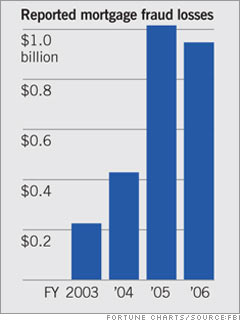
Mortgage Fraud - The million-dollar dump

A con artist looks for a low-end, rundown house for sale. He approaches the seller and says he's willing to pay the full asking price-but only if the seller will do him a small favor. See, the buyer needs a bigger mortgage than the house is worth. So if the owner agrees to relist the house at, say, triple the price, then the buyer can apply for a bigger mortgage.
The swindler often tells the homeowner not to worry-he wants to use the extra mortgage proceeds to fix up the house. The seller usually heartily agrees: He's getting the full price … and besides, wouldn't it be nice to have the place fixed up? The swindler, using a false identity, takes out the supersized mortgage, pays the seller, and pockets the remainder. The house usually ends up in foreclosure.

Money, Money, Money

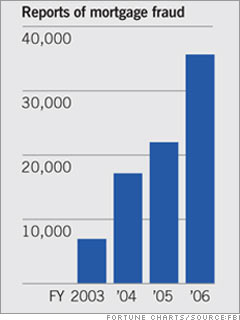
Mortgage Fraud - Straw-man swindle

Con artists use a "straw man" or "straw buyer" to purchase a property. A straw buyer is usually someone fairly unsophisticated who has passable credit. Often straw buyers are told by the huckster-a mastermind who uses a false identity and typically poses as a sophisticated investor-that they'll get a nice chunk of money if they go in on a plain-vanilla business transaction with him.The straw buyer gets a mortgage on buying a property. Then the straw buyer signs the property over to the huckster in a quitclaim deed, relinquishing all rights to the property as well as the underlying mortgage. The straw buyer gives the huckster the mortgage proceeds, taking a small cut-usually 10 percent-for himself. The huckster doesn't make any mortgage payments and often even pockets rent from unsuspecting tenants until the property falls into foreclosure. Usually the straw man, not the mastermind, is arrested for fraud.
Money, Money, Money

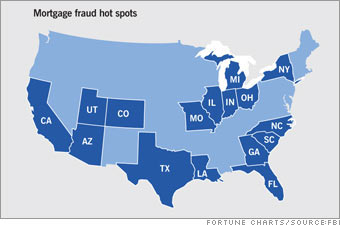
Mortgage Fraud - Rent-to-steal

Say you're advertising to rent your home or investment property. A renter shows up who seems to have all the right documentation to qualify. It's a deal! The monthly rental checks start coming in on time. But behind your back, the renter (using an alias with fake or stolen identification) goes to the local court and files a false "satisfaction of loan" document complete with your forged signature, forged bank officers' signatures, and bank seals. This shows that the property is now "free and clear"- that is, there are no outstanding mortgages on it.

Now the renter/ con artist is able to go to lenders and take out new loans on the property-often taking out several, practically simultaneously, in your name. Suddenly your renter vanishes and three or four banks are claiming title to your home.


Money, Money, Money

Sidestep credit card fees

NEW YORK (CNNMoney.com) -- A senate panel is scrutinizing the fees and billing practices of the credit card industry. The good news is that reform may be on the way. But we'll give you the tools you need to protect yourself now from credit card fees.

1: Avoid universal default
Universal default is one of most controversial practices by credit card companies because it allows your issuer to raise interest rates on cards as high as 35 percent if you are late paying any other bills such as your car payment.


Credit Card Rates

Find the best credit card for you among thousands of issuing banks.
Select a card type from the pulldown menu and click on the arrow to begin.
Select a card type Standard Gold Platinum
But it may be on its way out. In fact, Citigroup announced recently it was abandoning the practice. As a consumer, it's very difficult to know if your card carries a universal default clause. But with a little bit of research, you can avoid cards that are notorious for universal default.

You can also check your cardholder agreement by looking at the area that mentions "default pricing." If that section indicates your default pricing is based on any information in your credit report, that's a red flag your card issuer has a universal default policy.

2: Forget double-billing
Double billing happens when the credit card company charges interest on your entire purchase even if you've already paid part of it off. So you wind up paying interest on the sum of the average daily balances for the current and previous billing periods. The people who are most vulnerable to this are those who sometimes carry a balance on their cards.

Too deep in debt? Where to turn for help
To avoid double (or two-cycle) billing, make sure your bank calculates your finance charge on one billing cycle only, says Curtis Arnold of CardRatings.com. Look for the phrase "average daily balance" on your credit card agreement.

Recently Chase announced it would end this practice and start charging interest on a customer's average daily balance for just one billing cycle.

3: Work around late fees
Lawmakers continue to challenge credit card execs over rising late fees and other dubious penalties and practices. Right now most credit card issuers charge late fees in excess of $30 and penalty interest rates can top 30 percent in some cases.

To avoid these fees, automate your payments online. You can even set up your payments months in advance. But, if you know your payment is going to be late, you may be able to avoid a late payment fee if you call ahead. Credit card companies may give you a break in some circumstances.

4: Transfer with caution
We've all gotten those ads for zero-percent balance transfer fees. And while transferring a high credit card balance to a card with lower rates can be a great move, it's becoming more and more expensive.

It used to be that balance-transfer fees were capped at $75 or so. But more often credit card companies are getting rid of caps on balance transfer fees or increasing the fees, says Arnold of CardRatings.com.

For example, if you're transferring $10,000 to a card with a lower interest rate, and that fee is 3 percent, that transfer will cost you $300. To find out if you may fall victim to high balance transfer fees, look at your credit card agreement. If there is a reference to a minimum fee for a balance transfer, but there's no reference to a maximum balance transfer fee, chances are, there are no limits to how much money you may be on the hook for, says Arnold.

Money, Money, Money

Top Things to Know About Buying a Car

1. Make sure you are getting the right vehicle.

This seems obvious, but you could wind up an unhappy car owner if you haven't thought carefully about how many people and how much luggage or gear you need to carry.

2. Assess the worth of your old car.

Whether you plan to trade it in or sell it, your current car can be an important factor in your budget. Checking the right Web site and maybe your local newspaper will give you a realistic valuation. Selling it directly instead of just trading it may also mean a sizeable difference in what you get for it, though it may take a while longer to reap the proceeds.

3. Decide whether new or used is best for you.

Cars are built better now than in the past, so used cars make a lot of sense. But if you get a rebate or other cost break, the math may be on the side of a new vehicle.

4. Consider whether leasing or buying makes more sense.

Leasing provides lower monthly payments than buying with an auto loan. But it's not for everybody. If you don't have money for a down payment or if you trade your car every two or three years, you may be a good candidate for a lease.

5. Do your homework and set your target price.

The Internet has made it easier than ever to find out the dealer's cost for each vehicle and its options. That's the first step to getting the best possible deal.

6. Shop for money before you shop for the car.

If you plan to buy with a loan, check your credit union or local bank quotes online to find the lowest rate. Getting a pre-approved loan will give you added confidence in negotiating a good price.

7. Negotiating a lease.

In the complicated world of leasing, the dealer will have the upper hand unless you learn the jargon and how to negotiate the various segments of a lease deal.

8. Negotiate a purchase.

If you are doing it yourself, get bids from several dealers, keeping the focus on the dealer's invoice price, which you will know from your research. You may also be able to get bids without going to showroom after showroom.

9. If you hate haggling, consider using a car-shopping service.

Auto-buying services, such as Web sites or discount clubs, make things easy with pretty good, no-haggle prices. But with most of them, you get quotations from only one dealer. Consumer services that shop several dealers near you may deliver even better prices.

10. Don't let the deal-closer close out your savings.

The finance manager isn't there just for the paperwork. He or she wants to sell you high-profit financial and mechanical add-ons. These are seldom worth the money

Money, Money, Money

What grads need to know about finances

• You should begin saving for retirement right away. At a minimum, make sure you attain any matching contributions that your firm may offer.

• Use part of salary increases to increase the percentage of your salary saved. Windfalls such as an inheritance or IRS refunds should be used in the same manner. Don't use all of your take-home pay to finance your lifestyle--you will never be able to begin serious saving for retirement.


• While you should be cautious about taking on any kind of debt, there is a difference between good debt and bad debt. Debt used to finance "things"--credit card purchases, cars, any depreciating asset--is "bad" debt and should be minimized. Home purchases are assets that will probably increase in value, and debt used to purchase homes is "good" debt, or at least "not as bad as bad debt." Good debt is typically less expensive than bad debt--mortgage interest rates typically are much lower than credit card interest rates, for instance. Mortgage payments also are typically tax deductible, while the interest on credit cards and similar loans are not.

Money, Money, Money

Is Your House Worth More?

Toronto real estate has been on a roller coaster ride over the past 40 years, with soaring highs, gut-wrenching lows, strange twists and heart-stopping turns.

As an investment, you could always count on upscale areas like Rosedale, Forest Hill and the Bridle Path to produce good long-term returns. But if you put your money in the Beach or Riverdale in the last 20 years – or in more recent hot spots like South Riverdale and East York – growth has been spectacular. And, while new development has boosted prices in outlying regions such as Milton, King and north Pickering, other areas in north Toronto and parts of Markham are flatlining.

Surprisingly, 40 areas across the GTA have not even kept pace with inflation since house prices hit their 1989 peak.

The three maps show how average house prices have evolved over the last 40, 20 and 10 years. The largest map – showing changes since 1999 – includes the outer regions, reflecting the increasing coverage of the Toronto Real Estate Board, which tracks resale housing sales.


Money, Money, Money

4 hidden ways credit cards help you

Extended warranties
Before you pay extra for an extended warranty, find out whether your credit card will cover it for free first. Credit card issuers often offer warranty extensions.

"The odds of things going wrong in that warranty period are pretty slim, which is why issuers offer them," says Scott Bilker, the founder of financial advice site Debtsmart.com. World MasterCard and American Express cards, for example, double most warranty periods. (These warranty extensions max out at one year.)

Return guarantees
Stuck with an unwanted item because you lost the receipt or missed the short return period? If you can prove you purchased the item (by pinpointing it on your statement) and the store rejected your request to return it, the credit card issuer may accept the item instead.

Capital One's No Hassle Points Rewards card and many VisaPlatinum cards offer up to $250 back per item for up to 90 days after purchase.

Coverage of stolen or damaged goods
Under the Fair Credit Billing Act, a federal law that enables consumers to dispute unauthorized or incorrect credit card charges, every purchase made with plastic carries certain protections.

The law covers everything from double-billing accidents at the grocery store to the handbag you bought on eBay that turned out to be a fake.

Card companies regularly look for ways to get more of your money. Here's how to tell whether your issuer wears a black hat or white one.Theft and accidents happen, but that doesn't mean you're out of luck. Some card issuers will reimburse for damaged or stolen items within 90 days of the purchase date. They usually won't cover loss or normal wear and tear, however, so specify what happened when filing the claim, says Bilker.

Citigroup's Citibank cards, for example, offer as much as $500 to $1,000 back per item in the event of theft, accidental damage or (in some cases) fire. MasterCard offers up to $10,000 per item for Gold-level or better cards -- above and beyond what insurance covers.

Price protection
If the item you recently bought goes on sale or is cheaper at another store, your credit card may refund the difference. Just present proof of the sale price or price change and the original receipt.

The catch: Many issuers exclude prices found at online stores, making the policy significantly less valuable, Dworsky says. Most Chase and Citibank cards refund the difference up to $250, within 60 days of purchase.

Money, Money, Money